Charting Ledger Links That Power Reward Stacking and Status Escalations Across Handheld Reel Sessions
Parker Russell · May 16, 2026

Charting Ledger Links That Power Reward Stacking and Status Escalations Across Handheld Reel Sessions
Operators maintain detailed ledger systems that record every spin, deposit, and bonus interaction on mobile platforms, creating traceable connections between individual player actions and cumulative reward pools. These digital records allow platforms to link introductory offers directly to ongoing session data, so that free spin allocations from one campaign feed into multiplier opportunities in later play periods without resetting accumulated progress. Research from the UNLV International Gaming Institute shows that integrated ledger architecture supports seamless status advancement by converting session metrics into tier points that unlock higher reward brackets automatically once thresholds are met.
Handheld reel sessions generate continuous data streams that feed into centralized ledgers, where algorithms match deposit patterns with promotional triggers to enable stacking across multiple categories. A player who completes a daily login sequence might see those credits combine with loyalty multipliers from previous weeks, producing larger spin bundles that carry forward into the next mobile session. Such linkages prevent fragmentation of benefits, allowing status escalations to build steadily rather than restart with each new campaign cycle. Observers note that this approach became more refined during platform updates rolled out in early 2026, when several major operators synchronized their mobile tracking modules to handle simultaneous reward layers without latency.
Ledger Architecture Supporting Mobile Reward Flows
Modern slot ledgers operate through relational databases that tag each transaction with unique identifiers, permitting cross-references between welcome packages, reload incentives, and VIP escalators in a single view. When a user activates a handheld reel bonus, the system logs the originating offer code alongside real-time play volume, so any subsequent win or loss adjusts the remaining eligible amount in connected ledgers. This structure supports stacking because separate reward pools remain distinct until the player meets predefined criteria that merge them into enhanced prize structures. Figures released in May 2026 by industry monitoring groups indicate that operators using these linked systems report higher retention rates among mobile users who engage across consecutive days.
Status escalation mechanics rely on the same ledger connections to tally points from varied sources, including wager totals, session duration, and bonus utilization frequency. Once a player crosses into the next tier, the ledger automatically adjusts available perks such as faster withdrawal processing or exclusive free round allocations that persist across devices. Those who have examined these frameworks understand that the connections reduce manual intervention, since automated rules evaluate cumulative activity and trigger upgrades without requiring separate player requests. Data compiled by the Canadian Gaming Association demonstrates consistent growth in tier advancement numbers throughout 2025 and into the first half of 2026, particularly among users who maintain steady mobile session patterns.
Practical Stacking Sequences in Handheld Environments
Consider a typical sequence where an initial deposit bonus activates on a mobile slot title, after which continued play feeds wager data back into the primary ledger. The recorded activity then qualifies the user for an additional spin package that stacks atop the original balance, extending playtime while preserving any partial progress toward status milestones. Platforms achieve this by maintaining separate ledger columns for each reward type, yet linking them through shared player identifiers that update in real time during handheld sessions. What's interesting is how these connections handle edge cases, such as partial bonus consumption, by carrying remaining values forward rather than discarding them at session end.
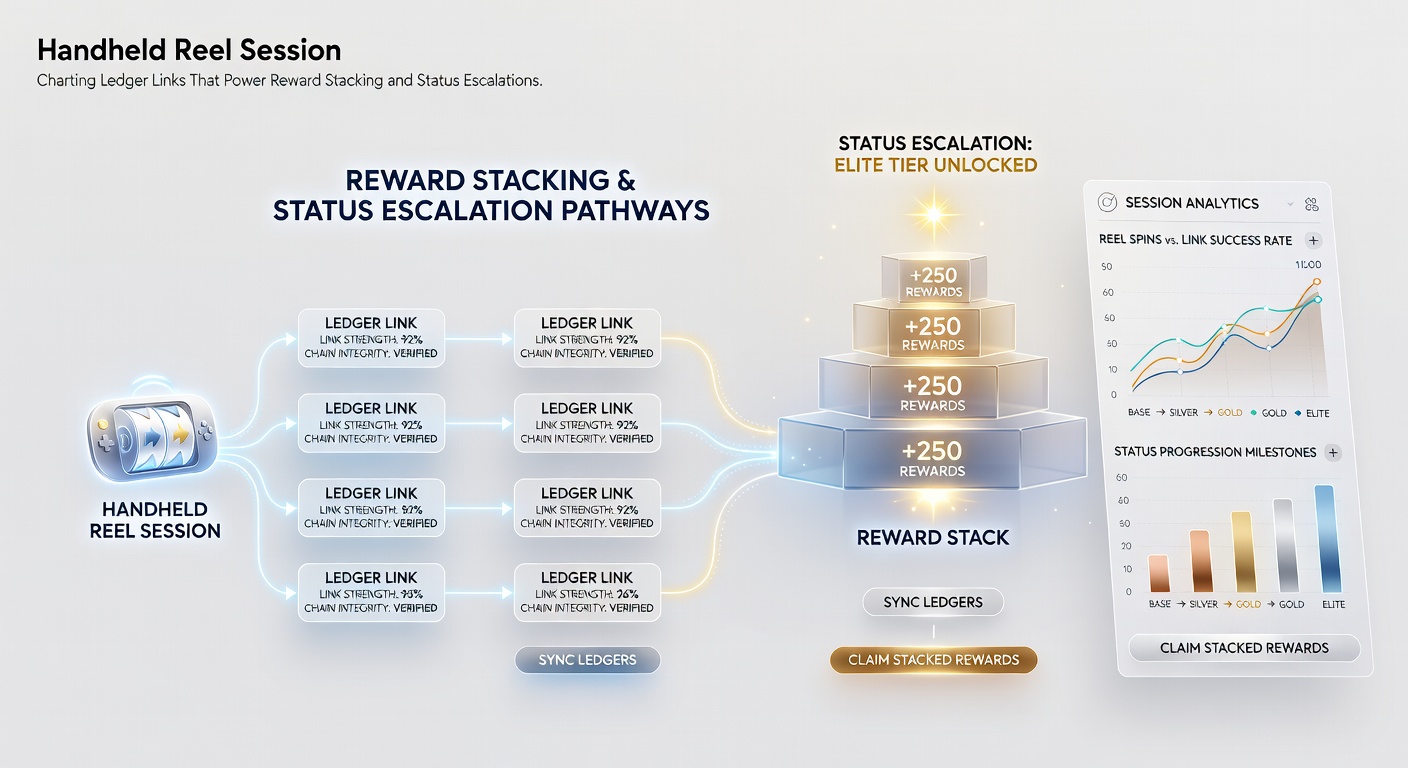
Further stacking occurs when status-based multipliers apply retroactively to earlier ledger entries once a new tier unlocks. A player who reaches silver level during one evening of mobile play might receive an uplift on all prior bonus credits logged that week, increasing their effective value without additional deposits. Such retroactive adjustments depend entirely on the ledger's ability to recalculate historical data points against current tier rules. Reports from the Australian Gambling Research Centre highlight that operators who prioritize these recalibration features see measurable increases in average session length among mobile participants who track their own progress through in-app dashboards.
Technical Integration and Data Accuracy
Accurate charting of ledger links requires robust synchronization between mobile application layers and backend servers, ensuring that every reel outcome and bonus claim registers instantly across distributed systems. Developers achieve this through event-driven architectures that push updates to the central ledger within milliseconds, minimizing discrepancies that could interrupt stacking or delay status notifications. In May 2026 several providers introduced enhanced API protocols specifically designed to maintain continuity during network fluctuations common in mobile environments. These protocols preserve the chain of reward eligibility even when players switch between Wi-Fi and cellular connections mid-session.
Verification processes embedded in the ledger framework cross-check player identifiers against regulatory compliance markers before permitting stacked rewards or tier upgrades. This step prevents unauthorized merging of accounts while allowing legitimate users to accumulate benefits across multiple handheld sessions. Those monitoring industry standards observe that the added verification layer has become standard practice among operators seeking to scale their mobile offerings without compromising record integrity. The resulting transparency also supports audit trails that external reviewers can follow when assessing reward distribution fairness.
Conclusion
Ledger links form the operational backbone that enables reward stacking and status escalations to function smoothly across handheld reel sessions. By maintaining connected records of activity, deposits, and tier progress, platforms deliver continuous benefit flows that adapt to individual player patterns. Continued refinements in data synchronization, visible through updates implemented by mid-2026, further strengthen these connections and support broader adoption of mobile slot formats. The documented outcomes from regulatory and academic sources confirm that well-structured ledger systems contribute directly to sustained engagement metrics in the sector.